The Opening Trap: Why Memorizing Moves Is Not the Same as Understanding a Plan
Opening trap awareness helps you see why a memorized move may no longer fit, then choose a practical response based on the position in front of you.
You remember the opening sequence, make the expected move, and then your opponent plays something unfamiliar. That is the opening trap of memorization: you know what comes next in your notes, but not why it belongs on the board. A plan gives you a reason to adapt; a move list does not.
An opening variation is a sequence of moves, while an opening plan explains what those moves are trying to accomplish. Memorized moves can save time when the position matches your preparation, but understanding matters as soon as the opponent changes the position. The useful question is not only “What did I prepare?” but “What does this position need now?”
What makes memorizing moves different from understanding a plan?
Memorization links a position to a familiar reply. Understanding links the position to a purpose: develop a piece, contest the center, safeguard the king, or prepare a pawn break. The first method works only while the board resembles the line you learned; the second can guide you through a different move order.
For each move in an opening, ask what it changes and what you expect to do next. A knight developed toward the center may help control central squares and clear a path for a bishop. If an opponent’s move makes that plan awkward, the point is to find another useful development move, not to place the knight automatically.
A move can have a benefit and a cost. A pawn advance may gain space while weakening a square, and a developing move may improve one piece while blocking another. Naming both sides of the choice helps you understand the position instead of treating an opening move as a command.
Why does a memorized line stop being useful?
Your opponent is not required to follow the moves in your notes. A different capture, a quiet developing move, or a timely pawn advance can change which continuation makes sense. The problem is not that you forgot a move; it is that the reason for your expected move may have disappeared.
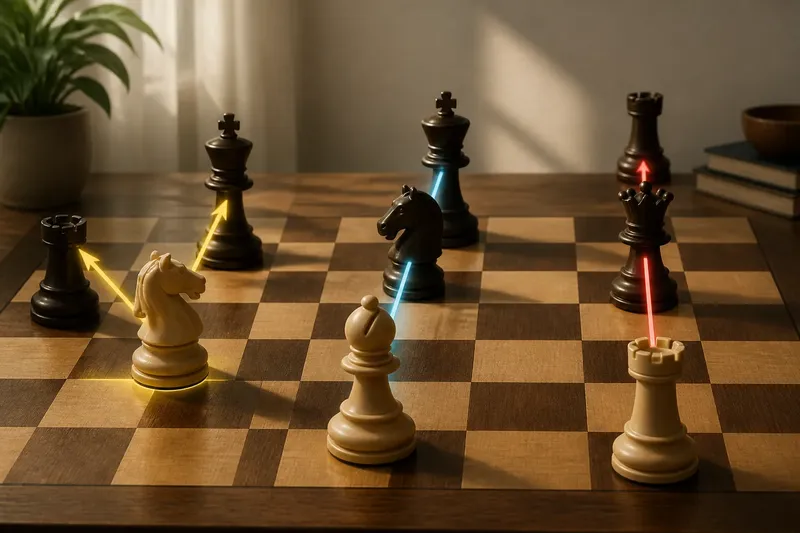
Some traps invite a player to take material that appears free. The capture may expose the king or leave the capturing piece vulnerable, but the details of the position determine whether taking is actually unsafe. Check the opponent’s forcing replies before deciding that a pawn or piece is either safe to take or “poisoned.”
It is not worth memorizing a trap’s final move without understanding the threat that makes it work. Instead, ask what the opponent’s last move attacks, what it leaves undefended, and whether your intended reply still addresses the position.
What should you do when your opponent leaves your preparation?
Pause at the first unfamiliar move and inspect the board rather than trying to reconstruct an entire opening tree. Use this short check to choose between responding to a threat and continuing your plan:
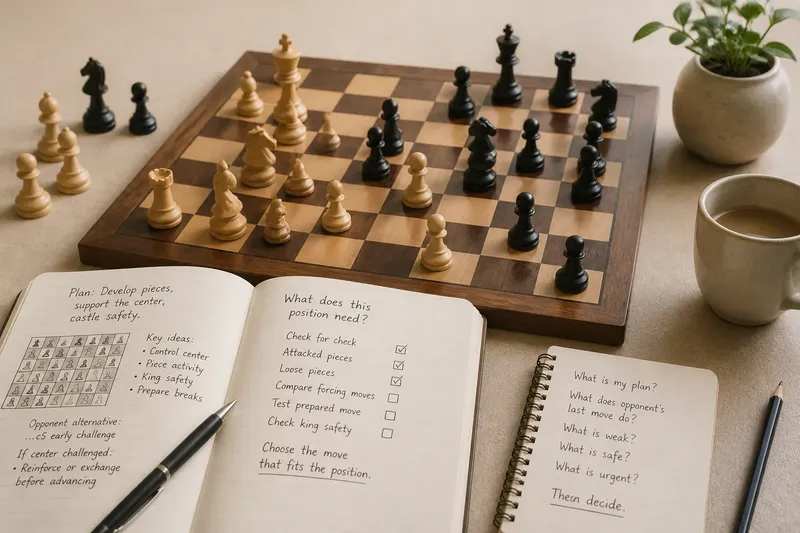
- Check for check: If the opponent has a meaningful check, then examine it first; if not, continue to inspect captures and threats.
- Identify attacked pieces: If a piece or pawn is under attack and cannot be safely ignored, then protect it, move it, or create a stronger counterthreat; if nothing urgent is attacked, consider developing.
- Review loose pieces: If one of your pieces lacks adequate protection on a vulnerable square, then add support or move it; if your pieces are secure, assess the opponent’s weaknesses.
- Compare forcing moves: If a check or capture wins material or creates a direct threat, then calculate the opponent’s reply before choosing it; if it does not work tactically, prefer a quieter improving move.
- Test your prepared move: If it still develops a piece, supports the center, or meets a threat, then it may remain useful; if its purpose no longer fits, choose a different move and reassess.
- Check king safety: If your king is exposed or castling is blocked, then prioritize a safe route to king safety; if the king is secure, use the turn to improve coordination or central control.
Say you have prepared to develop a bishop along a diagonal, but your opponent advances a pawn that blocks that route and attacks your central pawn. First, check whether the pawn can be captured safely and whether the threatened pawn can be defended. If the capture exposes a piece or the defense is sound, make that tactical choice; if neither works, develop another piece that supports the center. The resulting decision is not “play the bishop move because it is next in the line,” but “delay the bishop until its route or purpose returns.”
How should you turn opening notes into decisions?
Keep notes short enough to use during a game. For each key position, record the move’s purpose, the opponent’s important alternative, and the condition that would make you change plans. A small diagram with a few annotated moves can be more useful than a long variation without explanation.
Imagine your notes say, “Develop the knight to support central control; if the opponent challenges the center early, reinforce or exchange before advancing.” During a game, the opponent challenges the center before you play the prepared pawn move. You check whether advancing would leave a pawn undefended, see that the support is missing, and choose to reinforce instead. The observable result is a new decision tied to the board, not a move copied from the next line in your notes.
When reviewing a game, mark the first position where your choice stopped matching the board, not merely the first move absent from your notes. Write down what you expected, what the opponent changed, and which candidate moves you considered. The lesson may be a missed threat or a plan that needed adjustment rather than a forgotten opening name.
Which opening ideas deserve a place in your memory?
Prioritize ideas that remain useful after the opening: piece activity, king safety, central control, and coordination. Learn the typical pawn breaks in your chosen openings because they affect where pieces should be placed. Also note which piece is awkward and what route could improve it.
Exact move order matters when a small detail changes the tactical or strategic meaning. For other positions, understanding the resulting structure and the decisions it asks of you is more useful than memorizing a long branch you cannot explain. When comparing positions from the same opening, note what stays constant and what changes, such as a bishop’s best square or whether a pawn break is safe.
What do players ask about opening plans?
Should beginners memorize opening theory?
Learn a few sensible developing moves and the ideas behind them rather than trying to remember long sequences. Basic principles help you adapt when an opponent chooses an unfamiliar move.
How can you tell whether a pawn is poisoned?
Before capturing it, calculate the opponent’s forcing replies and check whether your king or capturing piece becomes vulnerable. If you cannot see a safe continuation, choose development or defense instead of taking material on instinct.
What is the difference between an opening plan and a variation?
A variation is a sequence of moves; a plan is the purpose those moves serve in a position. A plan can survive a different move order, while a variation may stop applying as soon as one move changes.
How should you study an opening after a game?
Find the first position where your choice stopped matching the board, then compare your candidate moves with the opponent’s threat and your intended plan. Record one practical adjustment you can recognize next time instead of copying a line without context.
How does a plan make opening choices clearer?
Opening trap awareness is less about spotting a famous trick than noticing when a move no longer fits. Ask what each move attacks, supports, or leaves vulnerable, then choose a reply that serves a clear purpose. The board may depart from your notes, but a plan gives you a way to decide what to do next.
After a game, write one sentence beside the position that surprised you: what changed, and what should you reconsider if it happens again? That brief note ties opening preparation to a decision you can recognize over the board, even when the next move is not the one you memorized.