Your First Casual Chess Meetup: A Quiet Checklist for Joining In
A first casual chess meetup feels easier when you know what to bring, how to choose a pace, and what to ask before taking a seat.
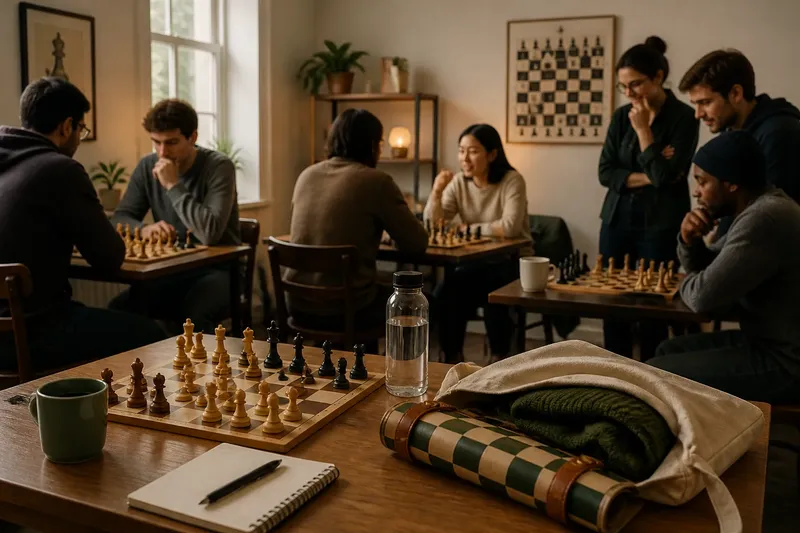
You arrive at a neighborhood cafe with a chess set tucked under your arm, but every table seems to be doing something different: one pair plays silently, another chats between moves, and a small group watches a game in progress. A little preparation for your first casual chess meetup can help you choose a comfortable table without pretending you already know its customs.
Which kind of meetup fits your evening?
Informal chess gatherings often mix several ways to play. Before you sit down, notice whether the event centers on relaxed games, timed play, or drop-in instruction. If the organizer has posted a description, check it for clues such as “all levels,” “blitz,” “casual,” or “teaching.”
- Unrated, untimed games: These suit newcomers who want room to think and ask occasional questions. Agree on whether players may take back a move or discuss the position while the game is underway.
- Clocked games: These suit people curious about a livelier pace and comfortable with a clock. Ask what time control the group uses and whether beginners can watch first or play without a clock.
- Instruction or analysis tables: These suit someone who would rather learn in a group than compete right away. You may be invited to solve positions, observe a demonstration, or review a finished game.
Say you know the rules but need time to think. An untimed table would likely feel more comfortable than a fast clocked game; if you arrive and discover the group is playing quickly, asking to watch one game first gives you a chance to see how its pace feels.
What should you bring, and what can stay home?
Bring what makes joining easy, not a full tournament kit. A small notebook and pen can help you jot down a question or a position you want to remember, but they are optional. A phone can serve as a clock only if the players agree to use it; do not start a timer on your own.
- Bring a chess set only if the organizer asks or you want a backup; many meetups already have boards.
- Carry a layer of clothing if the venue tends to be cool, and bring water if outside drinks are allowed.
- Have a simple introduction ready: “I’m new to the meetup and happy to play a relaxed game.”
- Keep your belongings clear of the board and walkways so other players can move around comfortably.
What is not worth the effort? Memorizing opening sequences, buying a chess clock, or preparing an impressive rating story. At a casual gathering, being clear about the kind of game you want is more useful than arriving with equipment or credentials you may never use.
How do you ask about table customs?
Local habits vary, and asking before play is ordinary courtesy, not an admission that you do not belong. A brief question prevents you from guessing whether the group expects quiet concentration, conversation, quick moves, or a certain way of handling a clock.
Try a specific, low-pressure question: “Do people here usually play with a clock?” or “Is it okay to ask questions during the game?” You can also ask whether players shake hands, record moves, or discuss a position afterward. Listen for the answer, then follow the table’s lead.
If you need a moment before deciding, say that you would like to watch a game first. If a player offers a game at a pace that does not suit you, it is fine to say, “Thanks—I’m looking for an untimed game tonight.” Clear, friendly wording makes it easier for both people to find a good match.
What should you ask before the first move?
Do casual games usually use a clock?
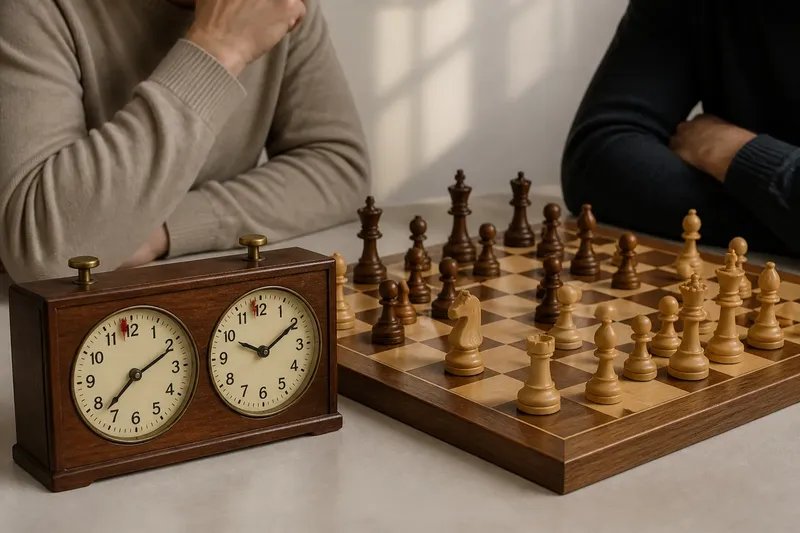
Some tables use clocks for every game; others bring one out only when both players want a faster session. Ask before the game starts, and agree on the time control and which side of the board gets which clock button if a clock is involved.
Can players talk or ask questions during a game?
That depends on the table: conversation may be welcome at one meetup and distracting at another. Ask whether questions are fine during play or better saved for the end, especially if you want feedback on a move.
Is it acceptable to watch before joining?
Usually, watching quietly from a comfortable distance is an easy way to understand the group’s pace. Avoid leaning over the board or suggesting moves unless the players invite you to comment.
What if I do not know anyone there?
Ask the host or someone between games whether a seat is open and what kind of game they recommend for a newcomer. If nobody is free, watching or chatting with the organizer is still a reasonable way to begin.
How do you choose between watching, playing, and learning?
Use your energy and comfort level to decide, rather than treating a meetup as a test. Watching first suits someone who wants to read the room; playing suits someone ready to meet a partner across the board; joining an analysis table suits someone with a question but little interest in competition that evening.
Imagine you arrive after a long day and see a lively clocked game alongside a quieter table. Ask whether the quieter table is open and whether its players prefer silence or conversation; if it is occupied, watch a round and check with the host before choosing another option. That small pause gives you information without obliging you to play.
When you do sit down, settle any practical details before the first move: which side you take, whether the game is timed, and what to do if you need to leave early. If you step away, tell your opponent rather than leaving them to guess. Keep the board intact if you plan to return, or agree to stop and reset later.
What is a simple checklist for arriving?
Use this short list at the door, then adapt it to the host’s instructions:
- Check the event description. Decide whether the gathering sounds casual, clocked, or instructional.
- Find the host or organizer. Introduce yourself and ask where newcomers should sit.
- Watch the table for a moment. Notice the pace and whether players are talking or concentrating quietly.
- Ask about the clock and conversation. Choose a table whose customs suit the game you want.
- Confirm the arrangement before play. Agree on a clock if needed and say whether you would like feedback afterward.
- Leave room to change course. Watching, taking a break, or choosing a different table is a normal part of a drop-in event.
For your first casual chess meetup, the most useful preparation is knowing how to state your preference: untimed or clocked, quiet or conversational, play or observation. Ask the host about any venue-specific rules, and treat the first visit as a chance to learn how that particular group works. A comfortable first game begins with a simple question, not a perfect plan.